
Council Approval & Regulations
Port Stephens Council Pool Regulations
Port Stephens has a new planning rulebook. Council's Development Control Plan 2025 (DCP 2025) is the plan that sets its local planning controls. It started on 30 October 2025 and replaced DCP 2014 for new applications. If you read pool advice written before then, some of it may be out of date.
This guide explains Port Stephens Council pool regulations using Council's own published pages and DCP 2025. It does not borrow rules from other councils. It's written for homeowners planning a pool, and for buyers, sellers and landlords with an existing pool in the Port Stephens Council area.
By the end, you'll know whether you need approval and where a pool can sit on your block. You'll also know the barrier and certificate rules, and which other permits or site checks to raise before you build.
We start with pool approval and the three pathways Council describes. Next, we cover siting and height limits, the koala-exit rule in Koala Bay – Tanilba Bay, and what goes into a pool DA. Then we look at other permits, pool fencing rules and when you need a certificate of compliance. We finish with a checklist of questions to settle before your build starts.
Do You Need Council Approval for a Pool in Port Stephens?
If your pool will hold more than 2000 litres, the answer is yes. Port Stephens Council states that pools over this size need approval, and it describes three pathways you can check.
- The 2000-litre threshold applies to in-ground, above-ground, portable and temporary pools.
- Council's three pathways are exempt development, complying development and development consent.
- Council advises checking the Codes SEPP first to see which pathway may apply.
- Some pool companies organise the approval, and some leave it to the owner.
The Codes SEPP is the NSW planning policy for exempt and complying development. This guide doesn't list its criteria for pools, so check the policy itself for those details.
Here is how the three pathways line up:
- Exempt development: Check the Codes SEPP to see whether this pathway applies to your pool.
- Complying development: Council or an accredited certifier can certify this where the pool meets pre-set standards.
- Development consent: This is a development application (DA). We cover the documents Council lists for a pool DA further down.
If you still need help after reviewing Council's website and the Codes SEPP, you can call Council's Duty Planning Officer on 4988 0255. They can give general advice on which pathway may apply. They can't confirm that your pool is exempt.
Who Arranges the Approval?
Council notes that some pool companies organise the approval, while others leave it to the owner. Confirm this early so you know who is responsible for it.
When you speak with a pool company, ask them directly whether they will organise the approval or leave it with you. A clear answer before the build starts means you know which steps are yours.
Where Your Pool Can Go Under Port Stephens DCP 2025
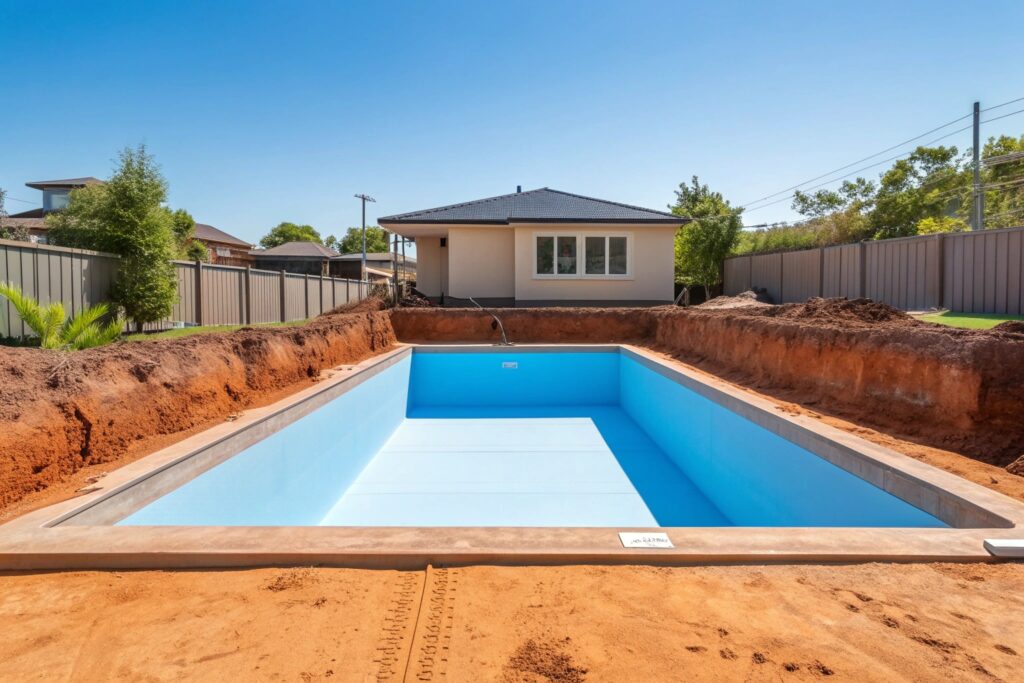
Council adopted DCP 2025 on 28 October 2025, and it commenced on 30 October 2025. Its residential controls include one written for pools, numbered C4.31. This control sets limits on where a pool can sit on your block and how high it can be.
Here are the pool controls in C4.31:
| Control | Requirement | Source |
|---|---|---|
| Building line | The pool must sit behind the existing building line. Exceptions may be possible on secondary frontages. | DCP 2025 C4.31 |
| Side and rear boundaries | The water edge must be at least 1m from side and rear boundaries. | DCP 2025 C4.31 |
| Pool height | The pool can be no more than 600mm above existing ground level. | DCP 2025 C4.31 |
| Decking height | Decking around the pool can be no more than 1.4m above existing ground level. | DCP 2025 C4.31 |
| Coping width | Where coping is more than 600mm above existing ground level, it can be no more than 300mm wide. | DCP 2025 C4.31 |
You can read the full control in DCP 2025 under C4.A Residential Development General, on Council's DCP website.
If you're planning a pool with a designer or builder, go through each row of this table together and check your plans against it.
The Koala-Exit Rule in Koala Bay – Tanilba Bay
DCP 2025 includes a local rule for pools in the Koala Bay – Tanilba Bay area. If your property is in this area, your pool needs a way for koalas to climb out.
To find out whether your property falls within the Koala Bay – Tanilba Bay area, check Figure 36 in DCP 2025. Council's map is the only reliable way to confirm it.
What Goes Into a Port Stephens Pool DA
If your pool needs development consent, you'll lodge a development application (DA). Council's Pools and Spas DA checklist lists six supporting documents:
- An AHIMS search (Aboriginal Heritage Information Management System)
- An erosion and sediment control plan
- A site plan
- A statement of environmental effects
- A survey plan
- A waste management plan
Council also publishes a DA Supporting Handbook (DASH) with templates. You can find both the checklist and the handbook on Council's DCP 2025 website.

Other Council Permits and Site Checks Before You Dig
Approval for the pool itself isn't the only thing to check. Council has other permits and property information worth raising before work starts.
- Dewatering permit: Council defines dewatering as removing groundwater or stormwater from a construction excavation, or emptying a storage such as a pool. You need Council approval before discharging water into its stormwater system, including gutters, pits and drains. The application needs a Dewatering Management Plan and public liability insurance. The permit covers discharge only, so taking groundwater out needs separate approval from WaterNSW.
- Acid sulfate soils: Check your property's acid sulfate soil class before you plan any digging.
- Flood and bushfire information: Council offers Flood Certificates, which estimate flood characteristics for a lot. It also publishes bushfire zone maps you can check for your property.
- Property-specific constraints: Raise any questions about your block with Council's Duty Planning Officer. You can also get a section 10.7 planning certificate for your property.
Pool Barrier Rules Council Lists
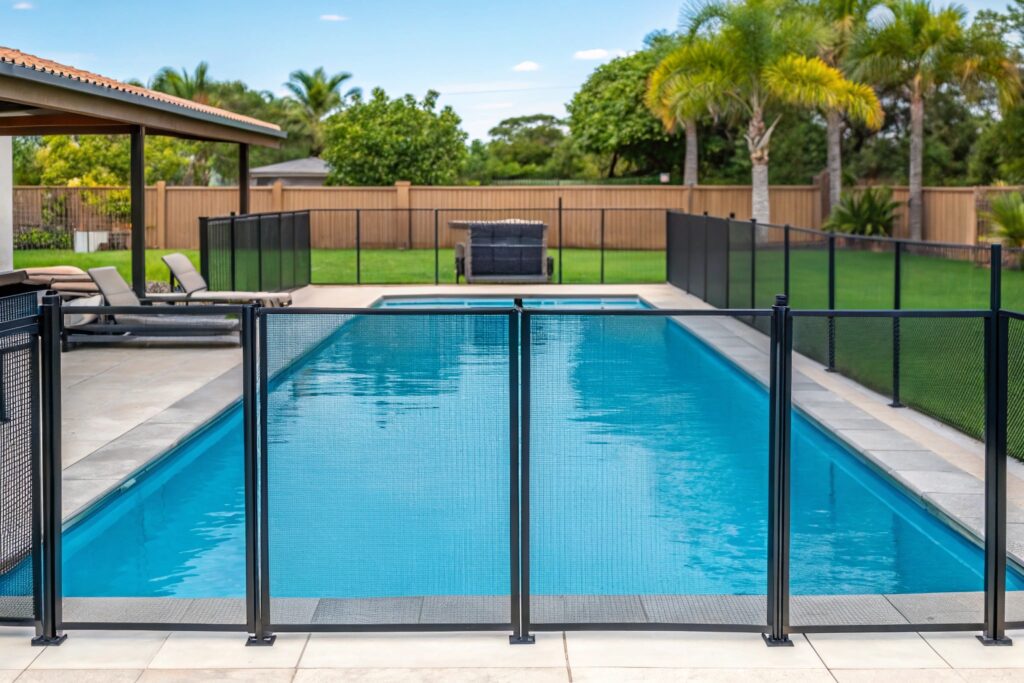
Council's swimming pools page lists a set of barrier requirements. Treat these as the requirements Council lists, rather than a complete list of every rule that could apply to your pool.
Barrier Height, Gaps and Gates
| Requirement | What Council lists |
|---|---|
| Barrier height | At least 1.2m high |
| Boundary fence as part of the barrier | At least 1.8m high where the boundary fence forms part of the barrier |
| Gaps | No gaps over 10cm under or within the fence |
| Gates | Must self-close and self-latch from any position |
| Latch release height | At least 1.5m high, unless it is shielded |
Extra Layout Rules for New Pools
For new pools, Council lists two more rules about the pool area:
- No direct entry from the house or garage: There must be no direct access from the house or garage into the pool yard.
- No unrelated structures: Structures such as BBQs, entertaining areas or cabanas aren't allowed inside the pool area. A filter cover is allowed.
When you plan a new pool, check both lists against your design, including where the gates and other structures will sit.
When You Need a Pool Barrier Certificate of Compliance
A Certificate of Compliance shows that a pool barrier met the requirements when it was inspected. Council lists four situations where a valid certificate is required.
| Situation | Certificate required? |
|---|---|
| Tourist and visitor accommodation, including Airbnb and B&B | Yes |
| A multi-dwelling property with more than 2 dwellings | Yes |
| Any property for sale | Yes |
| Any leased property | Yes |
| An owner-occupied home not being sold, leased or let | Council doesn't currently require an inspection, but you can request one |
Short-term accommodation needs a valid certificate even if it is rented just once a year.
Certificates are valid for 3 years. For a new pool, an occupation certificate can serve for its first 3 years.
If you live in your own home in the Port Stephens Council area, Council doesn't currently require an inspection of your pool, though this could change with future legislation, and you can still ask for one at any time. Some private organisations, such as home-based childcare services, may have their own policy requiring a valid Certificate of Compliance.
Council adopted its swimming pool inspection program in October 2013 and put it in place in 2014. The program includes inspections at least every three years for tourist accommodation and premises with more than two dwellings.
How a Council Inspection Works
- Book and pay: A first inspection costs $150.
- Inspection date: Council usually inspects within one to two weeks.
- The inspection: It takes roughly 15 minutes to an hour.
- The result: If the barrier doesn't comply, Council issues a Certificate of Non-Compliance (except for strata) and a report with a timeframe to fix the issues.
- Re-inspection: Each re-inspection costs $100.
If a Barrier Can't Reasonably Comply
Council charges $250 for an application for an exemption under section 22 of the Swimming Pools Act 1992. This applies where barrier requirements are impracticable or unreasonable, or where an alternative that is no less effective already exists.
Own an older pool? Read about our pool renovation service if you're planning updates before a sale or lease.
Questions to Settle Before Your Pool Build Starts
Before any work begins, run through these questions. Each one links back to a section of this guide.
- Who is arranging the approval? Confirm whether your pool company will organise it or leave it with you.
- Which approval pathway applies? Check the Codes SEPP and speak with Council's Duty Planning Officer.
- Does your design meet DCP 2025 control C4.31? Check the building line, the 1m side and rear boundary distance, the 600mm height limit, and the decking and coping limits.
- Is your property in the Koala Bay – Tanilba Bay area? Check Figure 36 in DCP 2025.
- Will the build involve dewatering? If water will go into Council's stormwater system, you'll need Council approval first.
- Have you checked your site? Look up your acid sulfate soil class, flood and bushfire information, and get a section 10.7 planning certificate.
- Does the layout meet the new-pool rules? Avoid direct entry from the house or garage, and keep unrelated structures out of the pool area.
- Will you sell, lease or short-term let the property? If so, you'll need a valid Certificate of Compliance.
Keep this list handy when you meet with a designer, builder or Council.
Once you've worked through these questions, you may be ready to talk through your plans. You can learn more about our pool design and construction and get in touch with our team to discuss your project.
This guide is general information based on Port Stephens Council's published pages and DCP 2025. It is not legal or planning advice. For constraints on your specific property, speak with Council's Duty Planning Officer and get a section 10.7 planning certificate.